How Does Dental Oral Appliance Therapy Treat Sleep Apnea?
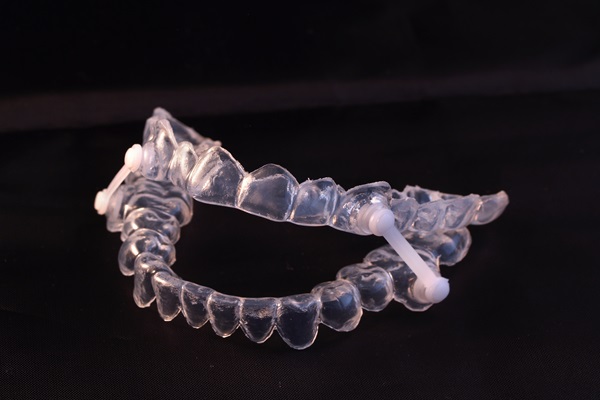
Wondering how oral appliances can help treat sleep apnea? Oral appliance therapy tends to be the initial treatment when someone is diagnosed with this serious sleeping disorder. Since there are different types of oral appliances, it is essential to choose the right kind.
Dental sleep apnea treatment
Dental treatment is a popular way to address sleep apnea, as dentists are qualified to diagnose and treat the condition. The main reason why sleep apnea treatment from a dental professional is so popular is that oral appliance therapy is a non-invasive option. Other treatment options include taking medications, using a CPAP machine, undergoing certain medical procedures, and undergoing surgery. However, oral appliances are easy to use, pain-free, and can do wonders for those suffering from sleep apnea.
According to WebMD, dental devices can help keep the airway open while sleeping, as dentists with special expertise in treating sleep apnea can custom-design them.
How dental oral appliance therapy helps sleep apnea patients
The information below explains how oral appliance therapy works to help those diagnosed with this serious sleeping disorder. The overall goal is to keep the patient's airways open while sleeping, allowing them to breathe more easily. This is why oral appliances focus on preventing the jaw and tongue from blocking one's airway.
It keeps the jaw in a forward position
Dental oral appliance therapy helps keep one's jaw in a forward position. This allows the jaw to be positioned in a way that supports a more open airway, allowing those diagnosed with sleep apnea to breathe more easily. The focus is on repositioning the lower jaw so it somewhat protrudes past its regular position, allowing for a more open airway. This type of oral appliance therapy uses mandibular repositioning appliances, which are custom-made for every patient.
It keeps the tongue in the front part of the mouth
Oral appliances also help keep a patient's tongue in the front of their mouth. When the tongue is pulled more to the front part of the mouth, it prevents it from falling into the back part of the mouth, which can block the airway, thus resulting in sleep apnea. Oral appliances that focus on keeping the tongue in the front of a patient's mouth often include using a mandibular repositioning appliance, which also focuses on keeping the jaw in a forward position. Another option is using a tongue retaining device, which only focuses on positioning the tongue.
To conclude
Now that it is understood that oral appliance therapy can help treat sleep apnea, those diagnosed with this serious disorder can take the next step. Since there are a few different oral appliance options, choosing the right one helps ensure sleep apnea sufferers can get the relief they seek. To receive professional guidance and make the right choice, a consultation appointment is necessary.
Are you considering Sleep apnea treatment in the Seattle area? Get more information at https://interbaydentist.com.
Check out what others are saying about our dental services on Yelp: Sleep Apnea in Seattle, WA.
Related Posts
Sleep apnea is a chronic disorder in which an individual briefly stops breathing while asleep. These breathing interruptions can cause the person to wake up, gasp for air or snore. Left untreated, this condition can lead to sleep deprivation and negatively affect overall health. Many people suffer from this sleep issue without knowing it. It is…
A dental implant offers a stable, natural-looking way to replace a single missing tooth while protecting the balance of the bite and long-term oral health. Just one missing tooth can impact a range of areas in the mouth, from how the teeth fit together to the underlying jawbone. That is why it is important to…
When discussing denture adjustments, the topic can extend beyond those performed by a dentist. Adjustments to your lifestyle can also help ease the transition as you get used to your new dentures. Whether this is your first set of dentures or you just got a replacement pair, you may notice discomfort in the mouth and…
Finding a high-quality dentist near me is the first step toward maintaining a healthy smile. This trusted professional can help ensure that you always have access to oral care services in the Seattle area. If you are currently searching for a reliable provider, the following guide provides a strategic selection process to help you find…